
Pet Microchipping.
Microchipping provides permanent electronic identification for your pet, helping support reunification when registration details are kept current.

Permanent Identification
Permanent electronic identification for your pet that cannot detach or get lost like a collar tag.
Understanding the microchipping process
How microchipping, scanning, and registration work together for pet identification.
Permanent electronic ID
An electronic microchip placed under the skin to provide a unique identification number for your pet.
Identification, not GPS
A microchip provides passive electronic identification rather than GPS or real-time tracking.
Registry connection
Implantation provides the physical identifier, which must then be registered with your contact details.
Contact information guidance
Keeping owner phone numbers and contact details up to date in the registry is essential.
Scanner identification
When scanned with a compatible reader, the microchip transmits its unique identification number.
Complements collar tags
Provides a permanent identification backup if a collar or external tag detaches or gets lost.
What is pet microchipping?
A pet microchip is an electronic capsule placed under the skin to provide permanent pet identification. Each microchip contains a unique identification number readable with a compatible scanner. A microchip is passive identification, not a GPS device or live tracking system. It does not transmit a live location signal or require batteries. Implantation and registration are distinct parts of the process: placing the chip provides the identifier, while registering and maintaining current owner contact details in the registry is essential for reunification support. If you have questions about microchipping for your specific pet, please call our clinic to discuss recommendations.
Why permanent identification matters.
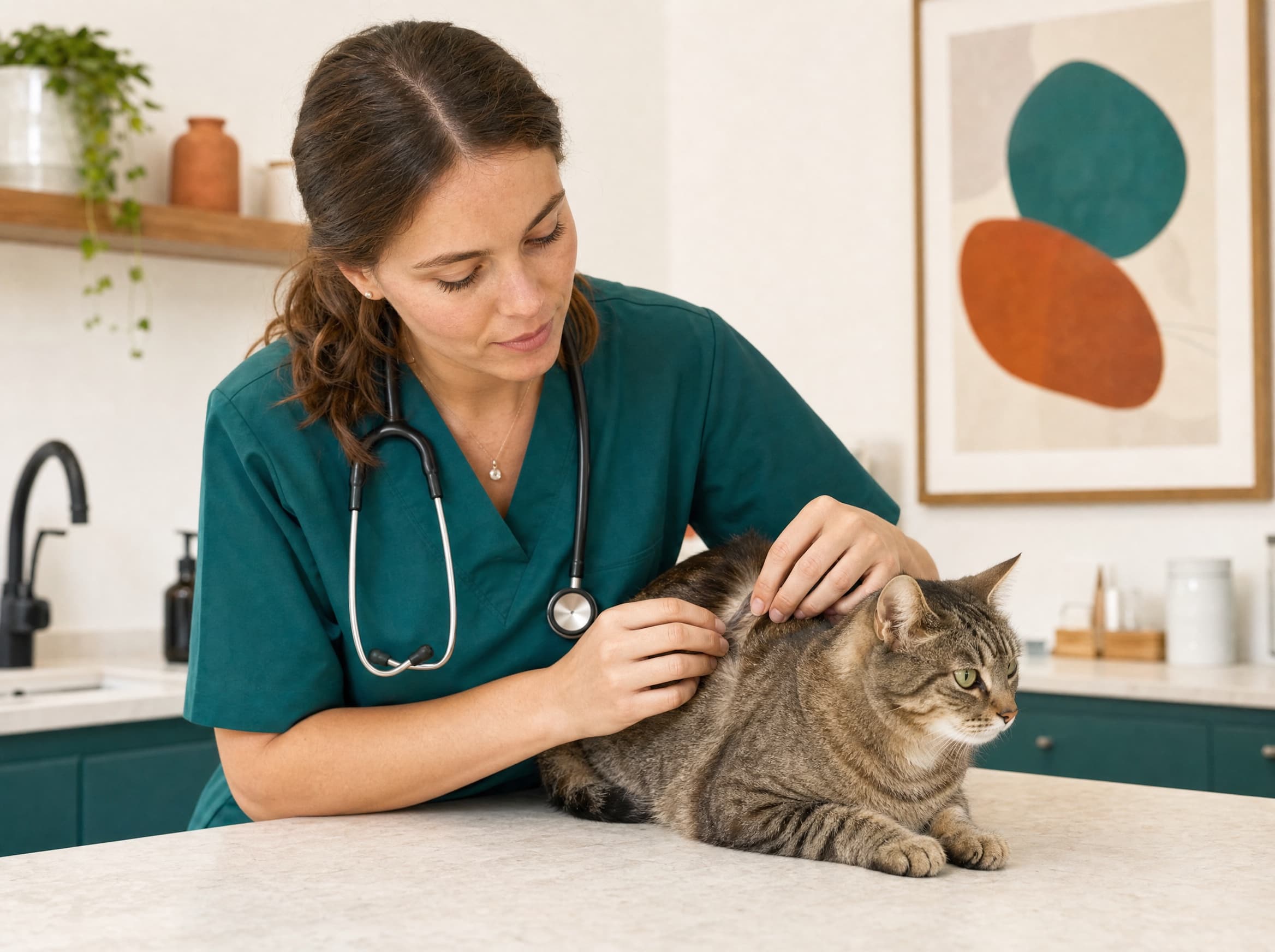
Permanent identification for your pet.
Collars and tags can detach or become lost unexpectedly. A microchip provides permanent identification, but remember that registration is a separate step and contact information must be kept current. Our team in Cullman is happy to discuss identification options for your specific pet.
What to expect
A gentle, step-by-step visit
1. Discuss identification needs
We discuss permanent identification options and answer questions about microchipping for your pet.
2. Microchip implantation
The microchip is placed under the skin to establish a permanent electronic identifier.
3. Registration guidance
Implantation and registration are separate parts of the process; we provide guidance on registering your chip.
4. Keep owner contact details current
To support reunification if your pet is ever lost, owner contact information in the registry must be kept up to date.
When to consider microchipping your pet
Common times pet owners ask our veterinary team about microchip placement.
Young Pets
Early veterinary visits are a common time for pet owners to discuss microchipping options.
Newly Adopted Pets
Pet owners often check whether a newly adopted pet already has an existing microchip.
Upcoming Clinic Appointment
Pet owners can discuss microchip placement during an upcoming scheduled appointment.
Active or Outdoor Pets
Pets that spend time outside or travel with their families benefit from permanent identification.
Unsure of Microchip Status
If you are unsure whether your pet has a microchip, you can ask our team to check.
Related Services
Other ways we help care for your pet’s health
Have questions about pet microchipping?
Call our Cullman clinic to discuss microchip options for your pet or ask about identification during your next visit.