
Follow the prescription label and the instructions from your visit
They cover the dose, the timing, and whether the medication should be given with or without food. If anything on the label is unclear, call us before the next dose.
Before you start
- Read the label — dose, timing, and whether food is allowed
- Don’t crush, split, open, or mix medication into food unless we’ve confirmed it’s safe for that specific prescription. Some medications stop working, or become harmful, when altered
- Wash your hands
- Have everything ready before you bring your pet over
- Stay calm and matter-of-fact — pets read your tension
Pills — dogs
Most dogs take a pill more easily when the whole thing is quick and low-drama. If we’ve confirmed the medication may be given with food, a soft treat made to hold a pill often works. Otherwise, give it directly.
- Sit or kneel beside your dog rather than leaning over them
- Gently tilt the head up and open the mouth
- Place the pill as far back on the tongue as you comfortably can
- Close the mouth and stroke the throat, or briefly blow on the nose, to prompt swallowing
- Follow with praise, and with water if allowed
Pills — cats
Cats are less forgiving of this than dogs, and more likely to remember it next time. Speed helps more than force.
- Wrapping your cat snugly in a towel with the head out gives you control and protects you both
- Hold the head from above, thumb and finger at the corners of the jaw
- Tip the nose upward — the jaw tends to relax open
- Place the pill at the back of the tongue, close the mouth, stroke the throat
- Let them go promptly afterward, and offer something positive
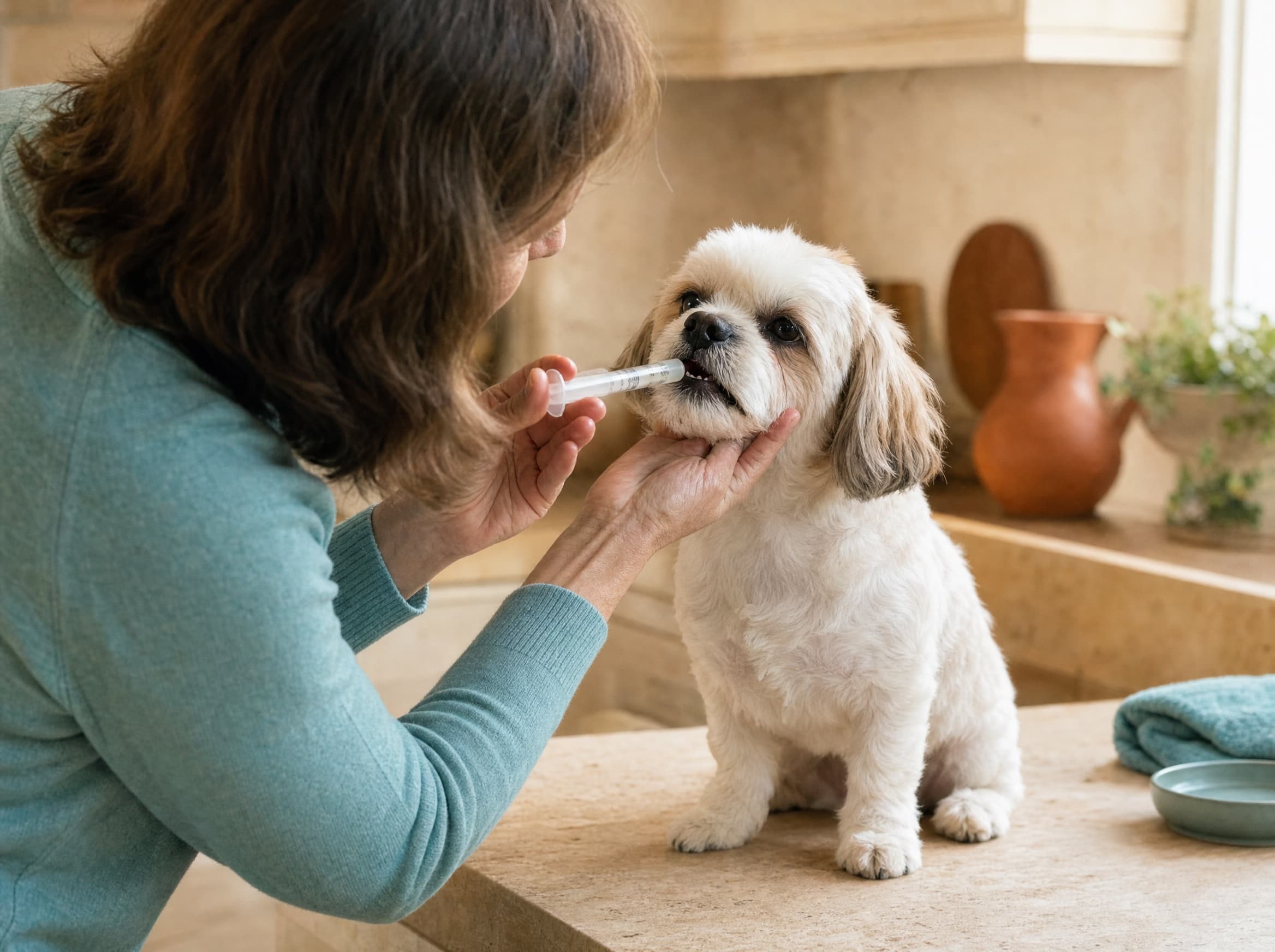
Liquid medication
- Draw up exactly the prescribed amount
- Slide the syringe into the pouch between the cheek and the back teeth, not straight down the throat
- Go slowly, in small amounts, letting your pet swallow between them
- Keep the head level rather than tipped far back, which helps avoid choking
Ear drops
- Hold the ear flap up to open the canal
- Place the prescribed number of drops in without touching the applicator to the ear
- Massage the base of the ear for several seconds — you’ll often hear it working
- Let your pet shake their head, then wipe only what you can reach easily
Eye drops and ointment
- Steady your hand against your pet’s head so you move together
- Tilt the nose slightly up and approach from behind or the side rather than head-on
- Don’t let the applicator touch the eye
- Drops go onto the eye; ointment goes along the inside of the lower lid
- Let blinking spread it
If a dose doesn’t go as planned
If your pet spits out a pill, or you aren’t sure whether the full dose actually went down, call us before giving more. Repeating a dose that was already partly swallowed can cause problems of its own, and we can tell you what to do for that specific medication.
If your pet consistently refuses
Don’t quietly skip doses or stop early — an incomplete course can leave the original problem untreated. Call us instead. Depending on the prescription, alternative medication forms may sometimes be available after speaking with the clinic.
Safety notes
- Finish the full course, even after symptoms improve
- Never give medication prescribed for one pet to another
- Never give human medication unless we prescribed it
- Store medication as the label directs, out of reach of pets and children
- Call us before stopping a medication early