
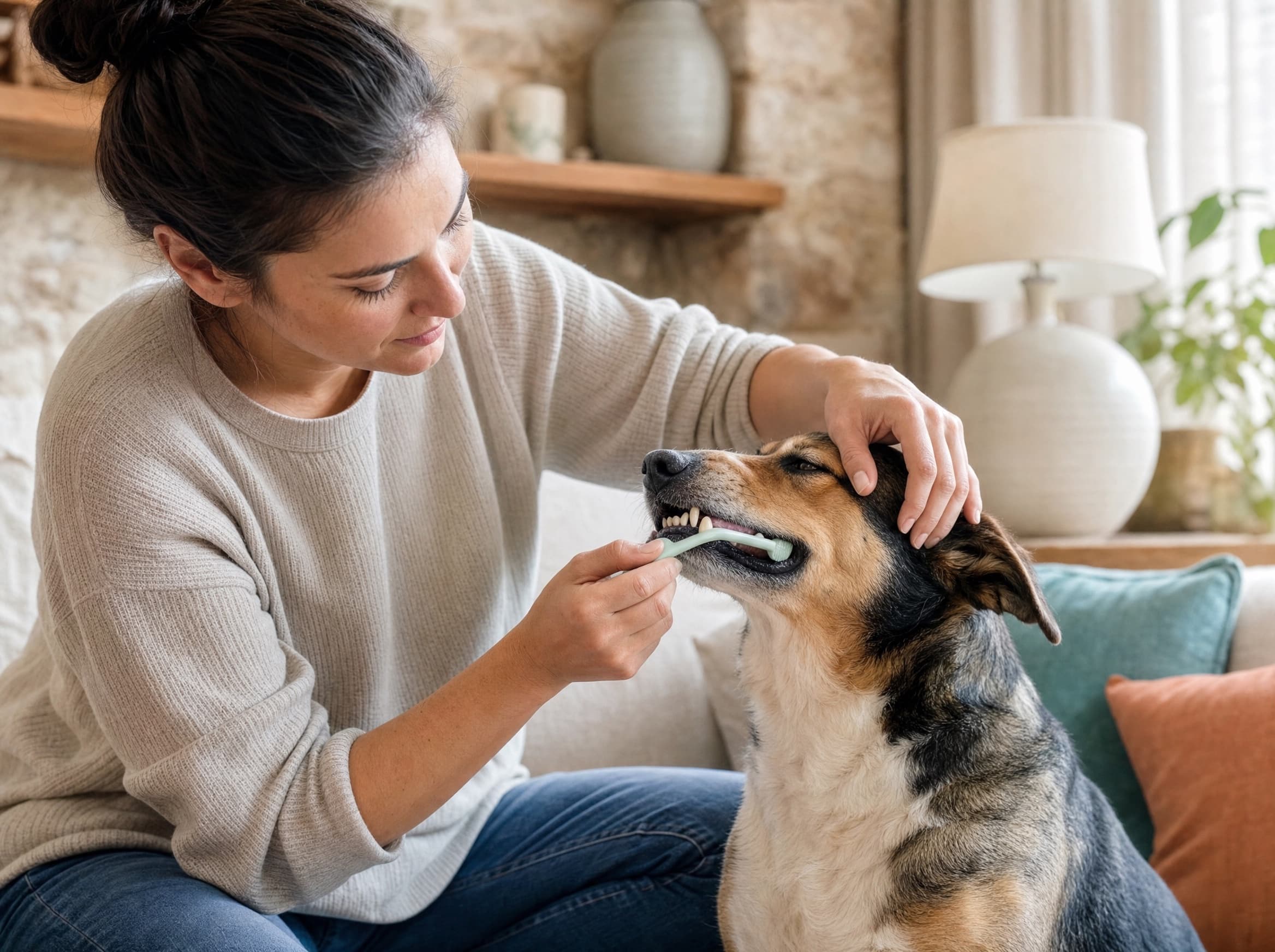
Home care supports professional dental care — it doesn’t replace it
Brushing and dental products can slow buildup, but they can’t remove hardened tartar or treat disease below the gumline. Those require a veterinary dental exam and treatment.
Why home care makes a difference
Soft plaque forms on the teeth continuously, and it hardens into tartar quickly once it’s there. Brushing works on plaque while it’s still soft — that’s the window where home care does the most good. Once tartar has hardened onto the tooth, brushing won’t remove it.
Use toothpaste made for pets
Use toothpaste formulated specifically for dogs and cats. Human toothpaste is not safe for pets — it isn’t meant to be swallowed, and some varieties contain ingredients that are harmful to animals. Pet toothpaste is made to be swallowed and comes in flavors most pets accept far more readily.
Start slowly
Most pets don’t accept a toothbrush on the first attempt, and pushing too fast usually makes it harder in the long run. Spread the introduction over days or weeks, at whatever pace keeps your pet relaxed.
- Day one: let them lick a little pet toothpaste off your finger
- Next: touch your finger briefly to the outside of the teeth and gums
- Then: introduce a brush or finger brush with paste, a few teeth at a time
- Build up to more of the mouth as they stay comfortable
- End each session while it’s still going well, rather than after it goes wrong
How to brush
- Lift the lip rather than trying to open the mouth
- Focus on the outer surfaces — that’s where buildup collects most
- Angle the bristles toward the gumline
- Small circular motions, a few seconds per area
- Don’t skip the large teeth toward the back
- Finish with praise every time
How often
Daily is the goal, since plaque re-forms continuously. If daily isn’t realistic, a consistent routine still helps — regular beats occasional.
If your pet won’t tolerate brushing
Some pets never accept a toothbrush, and it’s better to know that than to keep fighting it. There are other options — dental chews, dental diets, and water additives among them — and some pets do well with them. How much any given product helps varies quite a bit, so ask us what makes sense for your pet rather than choosing from the packaging.
One caution: avoid chews hard enough that you couldn’t dent them with a fingernail. Hard objects are a common cause of broken teeth.
What to watch for between visits
Looking in your pet’s mouth regularly means you’ll notice changes early. If you see something that concerns you, don’t wait for the next routine visit — call us. Our dental care page lists the signs worth calling about.